
multi-storied #54: Dry your hands!

Among the pieces in the new Indian edition of The Web Beneath the Waves—which you will doubtless remember is not only the full text of my Web mini-book but also an anthology of 15 essays and works of reportage, and which you will also know was officially available in Indian bookshops as of yesterday, and which you are surely going to buy right away—is a piece first published in the Guardian, on the industrial intrigues between the hand dryer industry and Big Paper Towel.
This piece is a keeper. The editor who suggested the idea to me, to this day, doesn’t know precisely what he had heard that prompted the idea or why he mentioned it. In the way that my pieces often get commissioned, it was a very short, very open-ended prompt. But he knew what he was doing when he mentioned it to me in particular, because this is my bread-and-butter: little bizarre niches that I can happily burrow into and explore for months on end.
There’s plenty of great stories in the piece itself, but I went back into my notes and found a few delicious things that I had to leave out. In no particular order, as below:
A hand-dryer man once told me about a move by a big paper towel company called, let’s say here, Texas Atlantic. At one point, he said, Texas Atlantic had on its website a pdf that you could print out; then you could cut along dotted lines to fashion it into the size and shape of a Do Not Disturb sign on hotel room doors. Only this sign said: We need paper towels. The idea was that people who were unhappy their workplaces had opted for hand dryers could pressure their employers to switch over—by hanging these signs up again and again until, I presume, the management just caved. My hand-dryer man was very unimpressed by this. “That’s a lot of effort you’re asking people to take. I’m not sure it worked.”
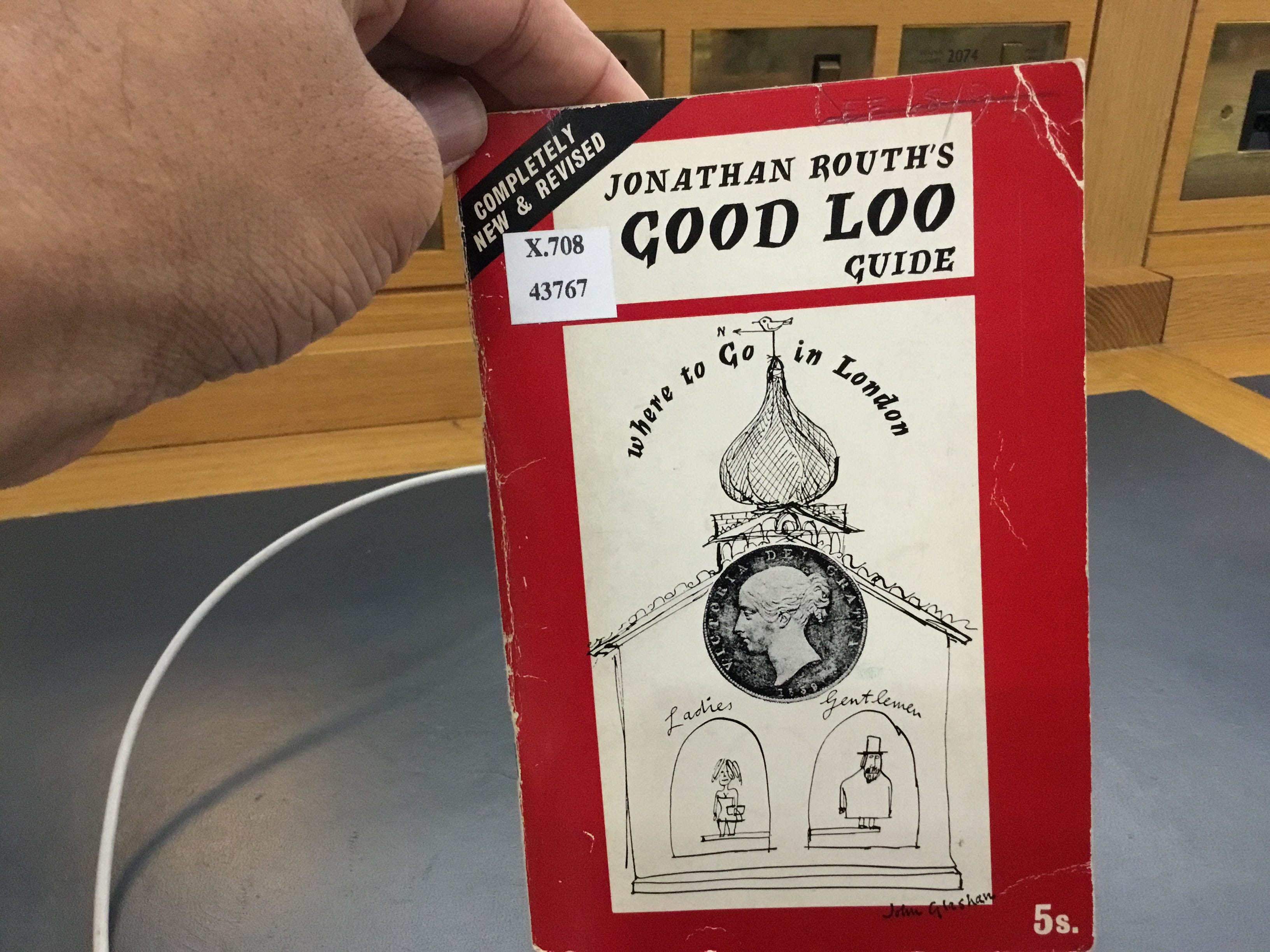
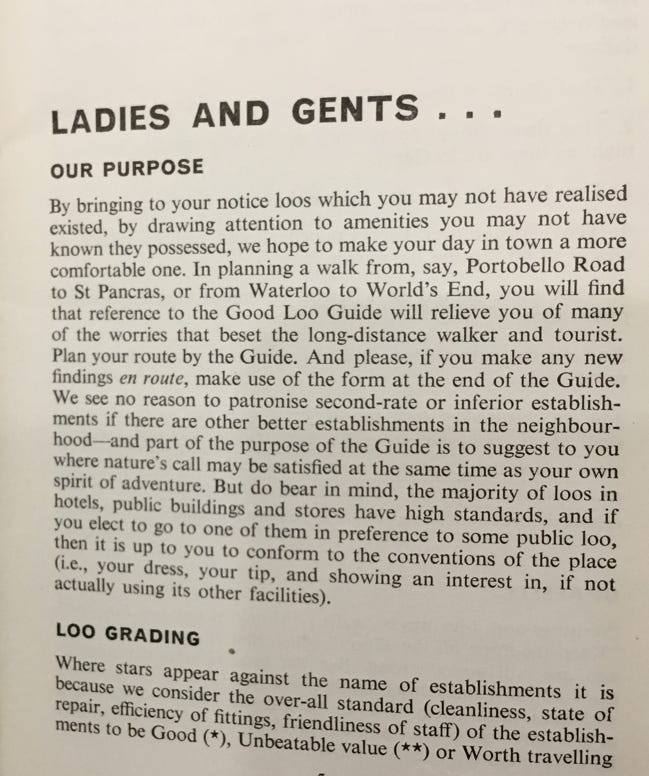
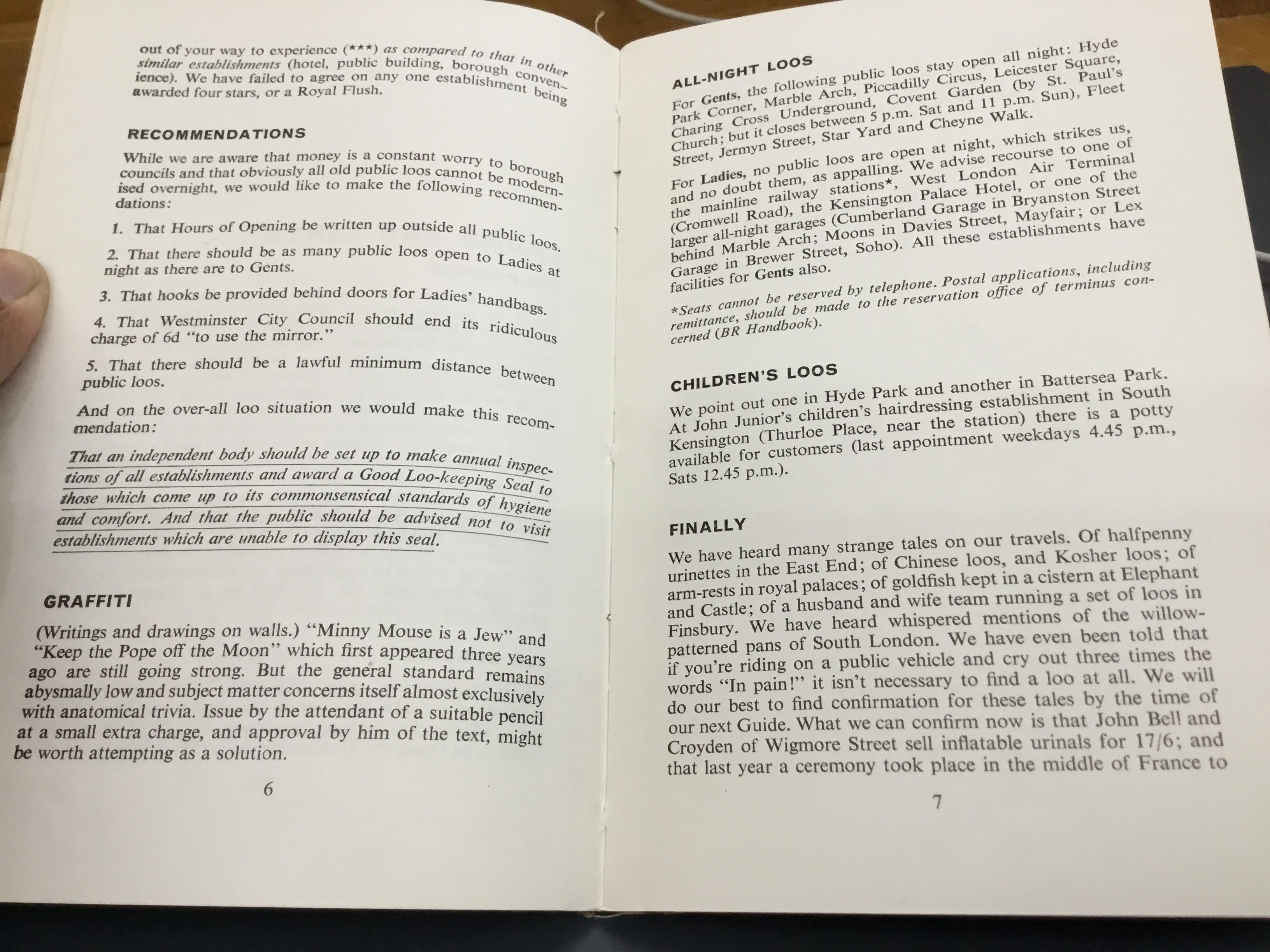
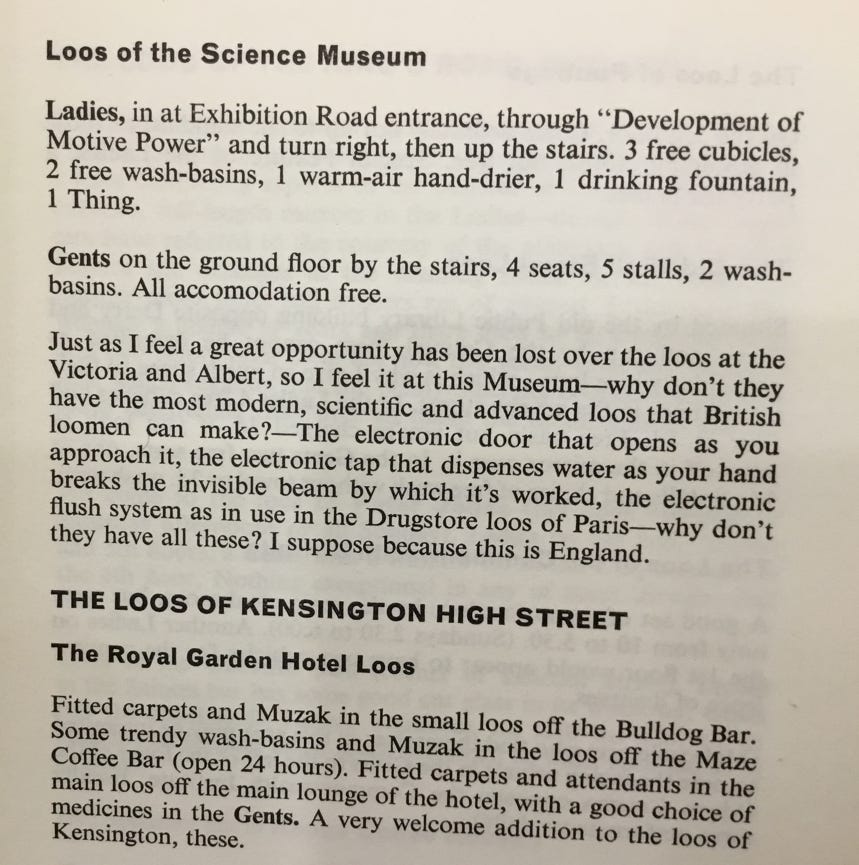
(But first, in case you’ve forgotten that link to buy the book…)The British Library, home of historical documents of tremendous significance and mighty tomes of reference and literature, also stocks many editions of the Good Loo Guide. I did not know such a thing existed until I went there to research some part of my book on JBS Haldane and idly searched the catalogue for toilet-related material for this piece. What a good thing I was procrastinating on my book! The Guide made for an excellent addition to the piece, but more importantly, I am now able to share with you photos of some of its pages, so that you too are able to partake of this gem. (Note the entry on the Science Museum: a great opportunity lost to install a truly futuristic loo in a temple to technology.)
From a former salesman at World Dryer: “You know what catapulted us into popularity? McDonald’s adopting the hand dryer in the 1970s. Look, they’re a fast food restaurant. The most money they can make out of their restrooms is zero. But you can lose money on restrooms, very easily. People assume that what is in the restroom is a representation of what goes on in the kitchen. With a hand dryer, you get cleaner restrooms, you can’t litter them up with paper towels. It gives the appearance of a neater environment overall. At the time, World Dryer coasted almost entirely on that. We called it two-by-thousands. Two dryers in a McDonalds—one in the men’s, one in the women’s—and thousands of restrooms.”
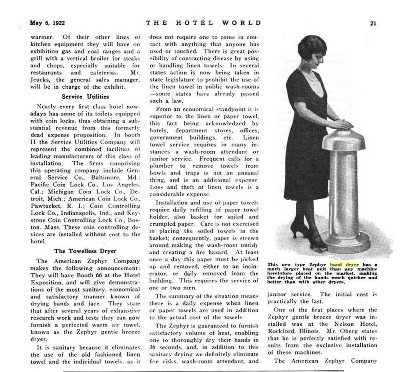
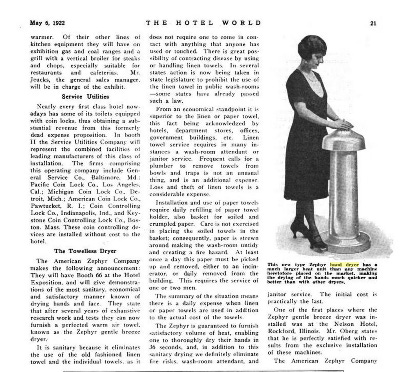
An ad for the “towelless dryer”, in a magazine called The Hotel World, in 1922.
One more out-take from my notes, source unknown:
“James Cameron’s 1994 blockbuster True Lies proves that Arnold Schwarzenegger knows how to make full use of a toilet. In this classic restroom scene, secret agent Harry Tasker takes it to a couple of punks in a public bathroom while his partner Albert Gibson, played by Tom Arnold, waits outside in the car. Tasker efficiently makes a mess of his two attackers (and the restroom itself) whilst a terrified elderly man sitting in one of the stalls becomes an unwitting witness to the action. The scene climaxes with Tasker beating the crap (sorry) out of the last-standing assailant with a hand-dryer before shoving his head into a urinal. That’ll leave a mark.”